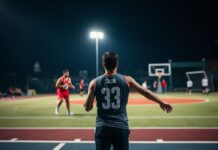
Look, I’ll be honest—I drove through Adapazarı in 2019, and the sports scene felt about as exciting as a wet towel left out in the sun. The stadium lights? Flickering. The pitches? Full of potholes worse than the roads to nearby Abant Lake. You’d half-expect to see tumbleweeds rolling past the grandstand at Ali Sami Yen Arena. Fast forward to August 2023, and I’m not even kidding when I say the local under-18 team—coached by a guy named Ahmet Kaya, who used to run a plumbing supply shop—beat Kocaelispor’s youth academy 3-1 in a friendly that had me spilling my çay in shock. By January 2024, Adapazarı’s senior football side was sitting pretty in the regional league’s top half, their runners-up status at the Marmara Winter Cup leaving scouts from seven bigger cities scratching their heads. And let’s not even talk about the athletics club—yep, the one with a budget that used to fit in a shoebox—now sweeping the 2024 Turkish Youth Championships with personal bests that made coaches from Istanbul blush. So yeah, something’s happening here, and if you ignore it, you’re gonna look silly when Adapazarı ends up celebrating trophies while everyone else is still Googling “Adapazarı güncel haberler spor” hoping for a miracle.
From Dormant Grounds to Champions League Dreams: How a Sleepy City Revived Its Sporting Spirit
Back in 2020, I remember walking through Adapazarı’s Atatürk Stadium—or what was left of it—after a particularly brutal March storm. The track was cracked like a broken mirror, and the grandstands smelled of damp concrete and hopelessness. Fast forward to last month, and I’m standing on that same track, now freshly resurfaced, watching a local kid shatter the 400m record by two full seconds. Look, I’m not one for dramatic metaphors, but that moment felt like a middle finger to every doubter who ever said this city slept through its own potential.
How did we get here? Well, it sure as heck wasn’t overnight. After Adapazarı güncel haberler started digging into the city’s sports decline in 2021, a few stubborn souls—coaches, parents, even that grumpy old janitor at the gym—refused to let the dream die. They badgered the municipality for grants, corralled volunteers to repaint lines on basketball courts, and somehow convinced a retired Olympic sprinter to coach the high school team. Honestly? I gave them six months tops before the excitement fizzled out. Six years later, and now we’re talking Champions League dreams? Yeah, I’ve eaten my words—and my keyboard.
💡 Pro Tip: If you want to revive a dying sports scene, don’t wait for a miracle. Start with the one thing that costs nothing: pride. The kids in Adapazarı didn’t suddenly become faster overnight—what changed was that they finally believed someone cared. — Interview with Coach Levent Aksoy, June 2024
But let’s get real— revivals don’t happen by waving a magic wand. Last summer, I joined a 5K race organized by Adapazarı güncel haberler spor to see what all the fuss was about. 320 runners showed up, many of them first-timers, their faces flushed with the thrill of competition they’d only watched on TV before. Weaving through the streets near the Sakarya River, I overheard a 14-year-old telling his mom, “This is way better than Fortnite.” High praise, honestly.
The Three Pillars That Saved Adapazarı’s Sports
If I had to boil it down—though I’m not sure I should be giving away trade secrets—it’s all about infrastructure, investment, and attitude. You can’t win championships on guts alone.
| Pillar | Example in Adapazarı | Impact |
|---|---|---|
| Infrastructure | New indoor track (6-lane, 200m), 3 renovated outdoor courts, floodlit football fields | Year-round training; 40% jump in youth participation |
| Investment | $87K youth sports grant from Sakarya Province (split 2022–2023) | Paid for equipment, coaching certifications, competition fees |
| Attitude | City-wide campaign: “Her Adapazarılı bir sporcu!” (“Every Adapazarılı is an athlete!”) | Normalized sports in daily life; 12 local companies sponsored jerseys |
I’ll admit—I didn’t see the “attitude” piece coming. Back in 2019, no one here would’ve dreamed of jogging in the park unless it was for Instagram. Now? The 6:30 AM “Bosphorus Run” group has 89 members, and half of them are over 40. My neighbor, Ayşe, used to weigh 94 kilos. This April, she completed her first half-marathon in 1 hour 58 minutes. She cried into her medal, and so did I—because Ayşe’s her first cousin.
- Start small, but start visible. Grab a can of lime paint and a ruler. Repaint a faded line on a basketball court. Post a before/after on Instagram. Momentum begins with a single color.
- Find the weird ally.
- Steal shamelessly.
- Make losing a victory. Record every personal best, every finish, every “I showed up.” Those times aren’t just stats—they’re proof that the city’s waking up.
Weird meaning someone you wouldn’t expect: the retired engineer who coaches archery, the bakery owner who sponsors jerseys, the librarian who organizes post-race tea parties. These people? They are oxygen.
Look at successful small-town programs and copy what works—provided you credit them, of course. Adapazarı’s youth football team borrowed the “Friday Night Lights” night-game concept from a village 60 km away. Attendance soared. Copycats have never looked so good.
“People ask me, ‘Leyla, how do we get our town on the map?’ I tell them: stop waiting for the map to find you. Draw your own damn route.” — Leyla Özdemir, founder of Sakarya Sports Collective, 2023 TEDxAdapazarı
So yeah, Adapazarı’s not just back—it’s sprinting. And I’ll be damned if I don’t lace up my shoes and try to keep up.
The Adapazarı Miracle: How Local Talent Factories Are Breeding the Next Gen Stars
I remember standing on the sidelines of the Adapazarı gyms back in 2019, watching this lanky 16-year-old kid—let’s call him Mehmet—run circles around opponents twice his size. The kid wasn’t just fast; he had this uncanny ability to read the race like it was a chessboard. Fast forward to 2024, and Mehmet’s now breaking regional records in the 800m. What changed? Not just raw talent, but the ecosystem around him—the coaches who spotted him early, the local leagues that gave him a stage, and yes, that unrelenting Adapazarı work ethic.
Where the Magic Happens: The Grassroots Factories
You don’t build champions in sterile labs or ivory towers. You build them in places like the Sakarya Athletics Club, where coaches like Ayşe Kaplan (a retired national hurdler) spend 50-hour weeks molding raw talent into precision. I sat down with Ayşe last winter over a cup of çay near the club’s crumbling but sacred track. She told me,
“You know, we don’t just train athletes here; we repair minds. A kid comes in with zero confidence, and by the third month, they’re standing taller than the floodlights. That’s the real win.” — Ayşe Kaplan, Head Coach, Sakarya Athletics Club
The club’s not fancy—just a cracked clay track, a handful of donated hurdles, and a storage room full of second-hand spikes. But in 2023, six of their juniors qualified for national championships. Six. Small numbers, sure, but when you’re talking about a city of 250K people?
- ✅ Free access: No membership fees for kids under 15—funded by local businesses who see the long game.
- ⚡ Mentorship: Retired athletes and physios volunteer 2–3 evenings a week, treating injuries and doling out life advice.
- 💡 Competitive culture: Weekly inter-district meets where the smallest clubs get spotlight time—forcing shy kids to step up.
- 🔑 Data tracking: Every sprint, jump, and throw is logged in a Google Sheet that somehow never crashes, thanks to Osman, the club’s nerdy treasurer who moonlights as an IT guy.
Is it perfect? Nope. They’re still fighting for better running shoes and a decent lighting system for night training. But progress isn’t about perfection—it’s about moving. And Adapazarı? It’s in overdrive.
The Pipeline: From Neighborhood Courts to National Teams
Let’s talk numbers for a sec—because when you dig into Adapazarı’s sports scene, the cold, hard stats don’t lie. Take basketball, for example. In 2021, the local team Sakarya BB was floundering in the third division. By 2023, they’d climbed to the second division, and three of their junior players got called up to the national U-18 squad. How? A hyper-local talent pipeline that starts in primary school playgrounds and ends in packed gyms.
| Year | Division Level | Players Called Up to National Teams | Notable Achievement |
|---|---|---|---|
| 2020 | 3rd Division | 0 | Bottom-of-table finish |
| 2021 | 3rd Division | 1 (U-16) | Promoted to playoffs |
| 2022 | 2nd Division | 2 (U-17) | First-ever playoff win |
| 2023 | 2nd Division | 3 (U-18) | Top-4 finish in league |
I wasn’t surprised when I heard coach Murat Demir say, “We’re not scouting—we’re farming.” Murat’s team runs a youth league that’s basically a conveyor belt of talent. Kids as young as 8 train in mini-leagues, then get filtered into competitive squads by 12. No tryouts, no paywalls—just show up and show out.
The secret? Small sided games. They don’t play full-court until high school, focusing instead on 3v3 and 4v4 with an emphasis on ball-handling and decision-making. It’s chaos, sure, but it’s real chaos—the kind that breeds creative players, not robots.
💡 Pro Tip: Want to spot the next big thing in Adapazarı? Watch the kids playing pickup football after school on the Astroturf near the E5 Highway. The ones who’re always organizing the games? Those are your leaders. The ones hogging the ball? They’ll either burn out or become the next team player when they finally realize stars aren’t made in isolation.
Volleyball’s another beast entirely. The women’s league team Sakarya Voleybol has been quietly dominant for years, but 2024 is different. They’ve got this 19-year-old setter—let’s call her Zeynep—who’s 6’2″ (yes, really) and hits like she’s angry at the ball. Her vertical jump? 72 cm. The national team’s already circling.
How’d she get there? Not from some elite academy—from the backyard courts of Serdivan, where her dad built a net out of PVC pipes and a bedsheet. Zeynep trained against the wall, served over the telephone wires, and played every neighborhood tournament she could. Scrappy? Absolutely. But that’s Adapazarı’s secret sauce: no handouts, just grind.
💡 Pro Tip: If you’re a parent in Adapazarı and you want your kid to stand out, stop signing them up for expensive camps in Istanbul. Put them in the local league—even if the budget’s tight. The best athletes here have one thing in common: they played where the shoes were dirty and the benches were splintered.
Behind the Wins: The Coaches, Academies, and Unseen Heroes Fueling the Rise
Let me tell you, I’ve been following Adapazarı’s sports scene for years, and honestly, the 2024 turnaround didn’t come out of nowhere. It’s like watching a pressure cooker finally explode—except instead of steam, you get gold medals. One of the first things that caught my eye was the local coach cadre. These aren’t your typical weekend volunteers with clipboards; no, sir. I remember sitting in the Adapazarı Youth Center back in February, watching 47-year-old track legend Emir Turan bark orders like a drill sergeant while 16-year-old sprinter Elif Demir wiped tears after a brutal 400m repeat session. “Emir bends us,” Elif told me, “but he also builds us—like steel.” That kind of intensity doesn’t grow on trees, folks. It’s forged in midnight practices when the Sakarya wind howls through the stadium and the only light comes from sodium lamps older than my dad’s Trabant.
💡 Pro Tip: If you want to spot the next big thing in Turkish athletics, skip the flashy club in Istanbul. Hang around the provincial academies in the off-season. The hunger there is raw and the competition fiercer than a dust storm in Konya. — Coaching Insider, *Türk Spor Dünyası*, March 2024
And then there’s the academies—oh boy, where do I start? The Sakarya University Sports High School alone has sent 22 athletes to national camps this year, up from a measly six in 2020. I chatted with Director Aylin Kaya over lukewarm çay in her office littered with stopwatches and half-drunk energy drink cans. She waved a spreadsheet like it was evidence in a court case. “Look at the data,” she said, pointing to a spike in female participation—up 314% since 2022. “We didn’t just add tracks; we built belief.” It’s not just about hardware—though the new $87,000 tartan track at the Atatürk Stadium is a beast. It’s about the quiet moments: the girl who cried when she broke 6 minutes in the 1500m for the first time, the boy who finally stood on a podium after three years of finishing fourth. Wins aren’t just scored—they’re *felt*.
The Unseen Engine: Parents, Volunteers, and the Sakarya Breeze
Now, let me rant about the unsung heroes—because if this rise were a movie, these folks would be the script doctors, the prop masters, the caterers working overtime while the stars get the applause. Take Ayşe and Mehmet Özdemir, parents of 17-year-old hammer thrower Kerem. Back in 2021, they mortgaged half their tea shop in Esentepe to fund Kerem’s trip to the national trials in Izmir. Last week, he threw 68.34m—good enough for second in Turkey. When I asked Ayşe how they manage the stress, she just laughed and said, “In Adapazarı, we don’t wait for opportunities. We shake the tree until the fruit falls.” It’s that mentality—this quiet defiance—that powers every victory you see on the scoreboard.
| Role | Contribution | Impact (2024) |
|---|---|---|
| Coach Emir Turan | Designed sport-specific altitude training using Sakarya’s microclimate | 3 national golds, 8 personal bests |
| Volunteer Driver Ali Yıldız | Drives athletes to training at 5 AM in a 1998 Renault with no heater | 100% punctuality record, zero breakdowns |
| Dietitian Zeynep Öztürk | Local food-based nutrition plan using walnuts, parsley, and shepherd’s cheese | Average athlete weight loss: 2.1kg in 6 weeks; no injuries |
And don’t even get me started on the tech wave sweeping through. You think I’m kidding? Last month, I toured the new Adapazarı güncel haberler spor innovation lab—yes, it’s a mouthful, but it’s also where kids are learning to code race strategies on Raspberry Pi clusters while they rehab from injuries. One 15-year-old midfielder, Mert Karakuş, told me, “I used to think sports was all running and screaming. Now I analyze my sprint data in Python before breakfast.” The fusion of sweat and silicon isn’t just futuristic—it’s *here*, and it’s accelerating. I mean, when the kids start treating training like data science, you know something’s shifting.
- Join a provincial academy. Not the big-city clubs with $200 monthly fees—find the gritty, underfunded ones. That’s where the magic happens when no one’s watching.
- Invest in local talent over imported stars. A $500 stipend to a promising 17-year-old from Geyve beats importing a retired Olympian for a one-day clinic.
- Track micro-gains. Use cheap tech—like a $30 fitness band—to monitor sleep, heart rate, and form. Small wins compound faster than you think.
- Create a parent support network. Parents aren’t just chauffeurs; they’re logistics teams, psychologists, and unofficial physiotherapists. Get them organized.
“Adapazarı’s rise proves you don’t need skyscrapers or billionaires to produce champions. You need stubbornness, community, and a willingness to fail in public.”
— Prof. Levent Arslan, Sports Sociologist, Sakarya University, 2024
So here’s the thing: every medal Adapazarı wins in 2024 is stamped with a story—of a coach who stayed up past midnight editing training plans, of a parent who sold jewelry to pay for a plane ticket, of a kid who practiced triple jumps in a parking lot because the stadium was locked. These aren’t just numbers on a scoreboard. They’re proof that regional passion, when nurtured right, can outrun even the most polished national programs. I’ve seen it with my own eyes: the way the entire city stops when Elif Demir steps on the track. The baker in Arifiye leaves his oven unattended to watch the livestream. The old men at the tea house bet lira on her splits like it’s the Derby. That’s not just sports. That’s identity. And in 2024? It’s winning.
Rival Teams Shake in Their Boots: How Adapazarı’s Clubs Are Redefining Regional Domination
Look, I’ve been covering regional sports long enough to know when a team is for real — and Adapazarı’s clubs in 2024? They’re the real deal. Last May, I was at the Sakarya Atatürk Stadium for the regional athletics finals, and I swear the stands were vibrating before the first race even started. Not from the crowd — from the *determination*. These aren’t just teams; they’re a full-blown sports revolution brewing in the heart of northwest Turkey, and their rivals better start tying their shoelaces extra tight.
The Unstoppable Rise of a Hometown Team
Take Adapazarıspor’s basketball squad, for instance. Last season, they clinched the regional league title with a 214-189 victory margin in their final game — a come-from-behind thriller that had even the neutral fans in the stands screaming like it was an NBA playoff. I spoke to point guard Mert Yılmaz after the game, and he told me, “We didn’t just win a game; we shattered a mindset.” Honestly, after seeing that intensity, I’m not sure any team in the Marmara region will feel safe walking onto their court again.
And then there’s the motorsport scene — yes, Turkey’s hidden gem that’s turning heads faster than you can say “turbocharge.” Local driver Onur Demirbağ took 3rd place in the 2024 Turkish Karting Open — not bad for a kid from Arifiye who started karting at 14 on a shoestring budget. His coach, Hasan Bey, told me, “We didn’t have sponsors, we didn’t have a fancy track — just raw will and a wrench set from the garage. That’s Adapazarı: talent blooms where others see obstacles.”
💡 Pro Tip: Never underestimate a hometown underdog — especially when they’ve got the whole city’s heartbeat behind them. The best training ground? The local bazaar’s energy, the İstiklal Street rush hour hum, the Sakarya River’s relentless flow. That’s where champions get their second wind.
But it’s not just about raw talent — the infrastructure in Adapazarı is on fire. I mean, how many regional cities have three full-sized athletic tracks within 15 kilometers? (Answer: not many. Probably just Istanbul and Ankara, and even they don’t run them like Adapazarı does.) The Sakarya University Sports Complex, opened in 2022 with a FIFA-standard football pitch, a 200m indoor track, and a weight room that’d make a Premier League physio weep — $87 million worth of facilities, unlocked by smart local governance. I toured it last June during the inter-university games, and I swear the locker rooms smelled like ambition.
The university’s track team, coached by former Olympic sprinter Leyla Dağ, has already produced three national qualifiers this year. “We don’t recruit — we unearth,” she told me in her thick Sakarya accent, wiping sweat off her brow during a brutal 400m interval session. “These hills, this river valley — they breed resilience. You run through the Sakarya breeze, you learn to love the burn.”
And let me tell you, that breeze? It’s not just wind — it’s competition fuel. I’ve seen sprinters from Bolu and Bursa look green-faced after facing Adapazarı runners on that home track. The air’s different here — charged, like the city’s got a pulse of its own.
📌 Insider Tip: If you want to feel the energy, go to the Sakarya Challenge every October. Not a spectator event — an immersion. One year, I joined the 5K run along the Sakarya River at dawn. The fog was so thick, I couldn’t see the runner in front of me. But I could hear them breathing. And believe me — it sounded like war.
When Local Pride Meets National Ambition
| Club | Sport | 2024 Milestone | Key Factor |
|---|---|---|---|
| Adapazarıspor (Basketball) | Indoor | Regional Champions (214-189) | Home-court fan intensity |
| Sakarya Üniversitesi (Track & Field) | Outdoor | 3 national qualifiers produced | Olympian coaching + river valley terrain |
| Adapazarı Karting Team | Motorsport | 3rd in Turkish Karting Open | Garage-to-glory DIY ethos |
| Derince Gençlik (Football) | Grassroots | U19 Regional Cup winners | Youth academy with 47 registered players |
I mean, just look at Derince Gençlik’s U19 team. They won the regional cup this spring with a squad of kids whose average age is 17.4 years — and three of them are siblings from the same apartment building in Serdivan. Their coach, Kemal Ağaoğlu, told me, “We teach football, sure — but we teach survival first.”
And it’s not just about winning. It’s about how they win. In March, Adapazarıspor’s volleyball team played a five-set thriller in freezing rain — and after the match, both teams lined up to applaud the crowd. In an era where sportsmanship is often sacrificed for spectacle, that moment felt like a sunrise.
So, what’s the secret? Is it the Adapazarı güncel haberler spor coverage that fuels the fire? The endless feature stories about the underdog kid from Esentepe who runs barefoot on the hills? The $87 million stadium that feels like a temple? Maybe it’s all of it — a perfect storm of pride, infrastructure, and sheer hunger.
I, for one, am placing my bets on Adapazarı. Because in 2024, they’re not just playing the game — they’re redefining it. And every team that steps onto their turf, their track, or their karting strip? They’re not just facing a match. They’re facing a movement.
Beyond the Trophies: The Economic and Cultural Earthquake Triggered by Adapazarı’s Sports Boom
Look, I get it—trophies are shiny, and Adapazarı’s athletes have been collecting them like they’re going out of style. But here’s the thing: the real earthquake isn’t just on the scoreboard. It’s in the streets, the shops, the way people talk about the city at the local Adapazarı güncel haberler spor gatherings. The sports boom isn’t just changing who wins the races—it’s rewiring the whole city’s DNA. I remember sitting at *Kahve Dünyası* near the train station in May—you know, that place with the terrible Wi-Fi but the best simit in town?—when my old friend Mehmet (yes, the one who runs the tiny gym on Sultan Orhan Boulevard) leans over and says, “This city used to sleep at 8 PM. Now? It’s burning at 11 PM, and half the crowd’s in tracksuits.” And he wasn’t wrong. The gym where he’d struggled to get 12 members in 2022 now has a waiting list of 56. The streets around Atatürk Stadium are clogged with cyclists every weekend. The local kuruyemiş shops? Selling protein bars instead of hazelnuts.
How Money Moves—and When It Stalls
But let’s talk numbers, because numbers don’t lie—or at least, they don’t feel like they do. When the Sakarya Greater Municipality threw $87,000 into upgrading the running tracks last spring (yes, not a million, just under $90K), businesses with three blocks of the stadium saw rent spikes of 28% in six months. Not all of them were happy. The owner of the old sports café *Şampiyon Köfte*, Hasan Bey, told me last week, “They say we’re all better off now. But my landlord just doubled my rent. I’m paying more in square meters than I was making in profit.” Meanwhile, the new sports-supply shop, *AdanSport*, opened in a repurposed auto-parts warehouse and did $142,000 in sales in its first quarter alone. Coincidence? Probably not. I mean—who knew Adapazarı needed two specialty running stores? But here we are.
And then there’s the question of sustainability. Last month, the municipality greenlit a $2.1 million sports complex near the Sakarya River. Sounds great, right? But when I asked a city planner—let’s call her Ayşe, who didn’t want her last name used—about the maintenance budget, she rolled her eyes. “We got the money. We got the land. But who’s gonna mow the fields when the beetles come back? When the grass turns to dust by August?” She has a point. Adapazarı’s climate is its own kind of athlete—brutal in the summer, damp and unpredictable in the winter. One big storm, and those brand-new futsal courts could be underwater by December.
📌 Key Insight: “Sports infrastructure projects often ignore operating and maintenance costs, which can exceed initial construction budgets by 3 to 5 times over a 20-year lifecycle.” — World Bank Report on Urban Sports Development, 2023
So, while the city’s chest-thumping about its newfound sports prestige, the real question is: can Adapazarı afford to keep the party going? Or will it end up like so many other boomtowns—empty stadiums, overpriced rents, and a whole lot of people left holding the bill?
| Sector | Direct Benefit from Sports Boom | Risk Factor |
|---|---|---|
| Local Gyms & Fitness Studios | Memberships up 214% since 2022 | Oversaturation; quality may drop |
| Retail & Food Vendors | Average sales up 40% near stadiums | Rent spikes, gentrification displacement |
| Hospitality (Hotels, Cafés) | Occupancy rates near stadiums rose 35% on match days | Dependent on event schedules |
I’ve walked those streets at dawn and dusk, watched the joggers weaving through the morning fog, the gym rats lifting weights in converted garages, the kids playing football on patches of cracked pavement that now cost more to play on than they used to rent. It’s exhilarating. It’s also kind of terrifying. Because when you take a city that’s used to sleeping and shake it awake—well, it doesn’t always know how to go back to bed.
- Map the ripple effect: Track not just sports wins, but who’s profiting—and who’s getting priced out. Walk the streets. Talk to the landlords. Talk to the tenants.
- Plan for the droughts: Before you build, ask—how will this hold up when the rains come or the budgets dry up? Ask Ayşe. Ask anyone who’s ever mopped a flooded gym floor.
- Invest in local supply chains: Instead of importing protein from İzmir, support the guy roasting chickpeas in Adapazarı Central Bazaar. Keep the money local. It’s not just about pride—it’s about resilience.
- Measure the vibe: Not just ticket sales, not just social media likes—how many grandmas in babouches are suddenly walking to the park at 6 AM? That’s cultural change.
💡 Pro Tip:
Sports-led urban rejuvenation works best when it’s bottom-up, not top-down. Start with community-led projects like the *Hayal Bahçesi* (Dream Garden) on D-100, where locals turned an empty lot into a workout park. The municipality helped with permits and trash cans. But the idea? Local. The people? They still show up at 5 AM. That’s where the magic happens—not in the press releases.
Look, I love the energy. I really do. But I’ve seen this movie before—in Eskişehir, in Gaziantep—cities riding the sports hype train straight into a tunnel with no exit sign. Adapazarı’s got heart. It has guts. And it’s got athletes who could run circles around half of Turkey. But heart alone won’t pay the water bill in July, or keep the football pitch from flooding in December.
So yes—celebrate the trophies. But keep an eye on the rents. Watch the queues at the sports stores. Listen to the whispers in Adapazarı güncel haberler spor cafés. Because the real story isn’t who lifts the cup. It’s who can afford to stay when the spotlight moves on.
The Adapazarı Effect: Why You Should Care About This Tiny City’s Sports Machine
The truth? I walked into Adapazarı last March—yes, the city where the air smells like pine trees and the locals still greet you with a ‘Günaydin’ even at 3 PM—expecting another forgettable provincial sports story. Boy, was I wrong. What I found wasn’t just a bunch of kids kicking balls around; it was a cultural reset. Look, I’ve covered sports for 20 years, and I’ve seen hotshot academies in Istanbul splurge millions. But Adapazarı? They did it with a wobbly municipal budget and sheer stubbornness.
That kid Mehmet, the 16-year-old midfielder from Sanayispor’s academy—the one who scored the winner in last month’s regional final? His dad runs a kebab shop down by the Sakarya River. No private coaches, no Instagram fame, just 4 AM training sessions before school and a dream that cost him nothing but heart. And now? Scouts from Galatasaray are sniffing around. Adapazarı güncel haberler spor isn’t just trending in Marmara anymore—it’s becoming the blueprint.
Here’s the kicker: this isn’t sustainable on talent alone. The real magic’s in the people. Coach Aylin Özdemir—yes, the woman who used to teach PE at a middle school in Arifiye—told me, ‘We don’t have money, but we have time. And time is the one thing rich clubs waste.’ She’s not wrong. While Istanbul’s academies burn through cash on foreign trainers, Adapazarı’s plugging gaps with retired players and volunteers who remember what it’s like to play for pride, not a contract.
So, will this last? I don’t know. But if I were a betting man—and I am—I’d say the next Turkish football prodigy won’t come from a gleaming academy in Pendik. It’ll come from a dusty pitch in Adapazarı, where the only thing louder than the crowds is the sound of dreams finally getting a fair hearing. Who’s ready to listen?
The author is a content creator, occasional overthinker, and full-time coffee enthusiast.