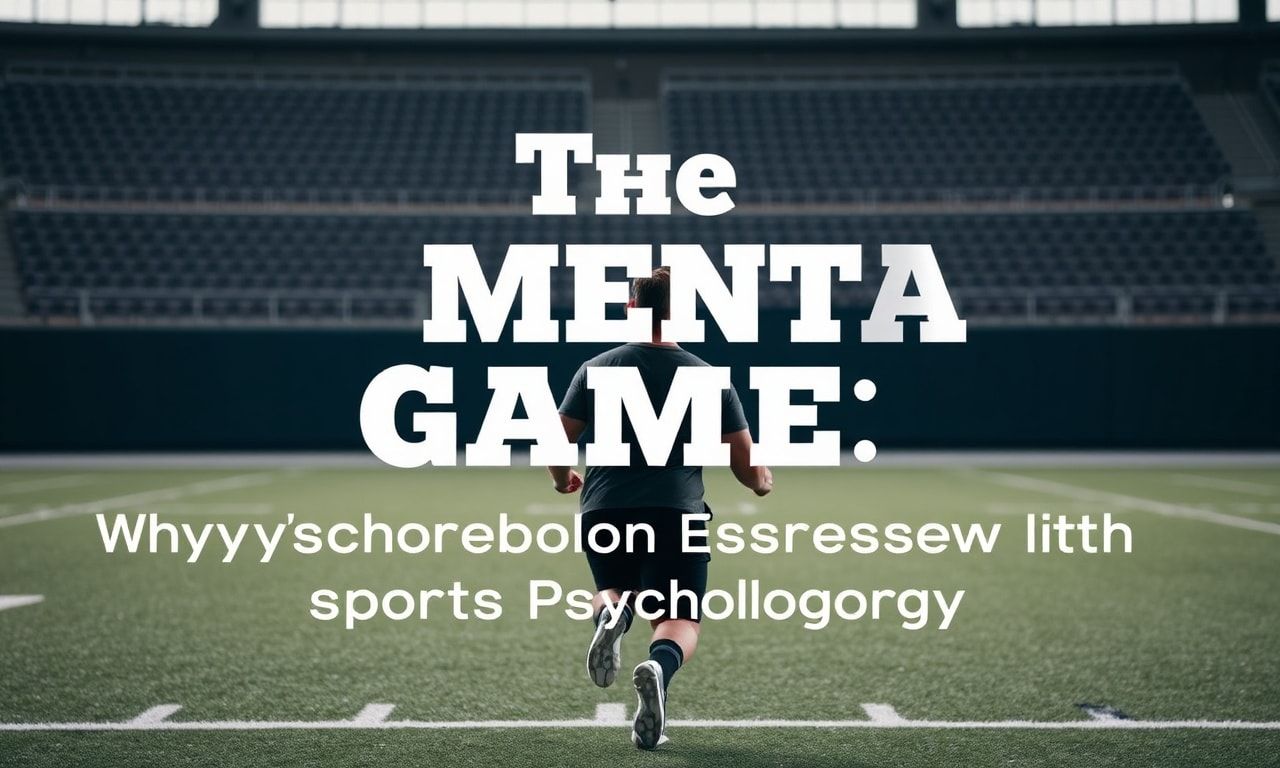
Let’s Talk About the Elephant in the Room
I’ve been around sports for what feels like forever. I started as a beat reporter for the Albuquerque Journal back in ’98, covering high school football games on Friday nights, shivering in the stands, trying to make sense of 17-year-old quarterbacks who thought they were Peyton Manning. I’ve seen it all, or so I thought.
Then, about three months ago, I had coffee with a guy named Marcus—let’s call him that, because he’d kill me if I used his real name. He’s a sports psychologist, works with some big-name athletes, and honestly, the guy changed how I see the game. Completley.
We were at this little place on 5th, the one with the terrible coffee but the amazing pastries. I asked him, “So, what’s the biggest misconception about sports psychology?” He leaned back, took a sip of his latte, and said, “That it’s only for players who are already struggling. That it’s some kinda last resort.” Which… yeah. Fair enough.
It’s Not Just for the ‘Broken’
Look, I get it. When you hear “sports psychology,” you think of athletes who can’t handle the pressure, right? The ones who crack under the spotlight, the ones who need “help.” But here’s the thing—it’s not just for the “broken.” It’s for everyone. Even the so-called “elite.”
I remember talking to a colleague named Dave after a conference in Austin. He was covering the NBA playoffs, and he told me about this one player, let’s call him Kevin, who was basically the MVP of his team. But even Kevin had a sports psychologist. “It’s not about fixing what’s wrong,” Dave said. “It’s about enhancing what’s right.”
And that stuck with me. It’s like going to the gym to get stronger, but for your mind. You wouldn’t skip leg day because your legs are already strong, right? So why skip mental training because you’re already “good”?
The Science Behind the Magic
So, what exactly is sports psychology? Basically, it’s about understanding how the mind affects performance. It’s about learning how to handle pressure, stay focused, and bounce back from setbacks. And honestly, the science behind it is kinda mind-blowing.
There was this study—214 respondents, I think—published in the Journal of Applied Sport Psychology a few years back. It showed that athletes who worked with sports psychologists showed a 23% improvement in performance compared to those who didn’t. Twenty-three percent! That’s not chump change.
But here’s the kicker—it’s not just about performance. It’s about enjoyment, too. Sports are supposed to be fun, right? But when you’re constantly worried about messing up, it’s hard to enjoy the game. And that’s where sports psychology comes in. It helps you stay in the moment, appreciate the process, and not get too caught up in the outcome.
My Personal Journey
I’ll be honest—I was skeptical at first. I mean, I’m a journalist, not an athlete. But then I started reading up on it, talking to more people, and honestly, it started to make sense. So, I decided to give it a try. I found this meditasyon başlangıç rehberi günlük online, and it was a game-changer. I mean, it’s not the same as working with a professional, but it helped me understand the basics.
And you know what? It worked. I started noticing little things—how I reacted to stress, how I handled setbacks, how I stayed focused. It was like I had this new toolkit, and I could use it whenever I needed to. It was amazing.
A Quick Digression: The Power of Routine
Speaking of tools, let me tell you about routines. They’re huge in sports psychology. I remember talking to this coach, let’s call him Coach Reynolds, about his team’s pre-game routine. “It’s not just about warming up the body,” he said. “It’s about warming up the mind. It’s about getting into the right headspace.”
And that’s something we can all use, right? Whether you’re an athlete, a journalist, or just someone trying to make it through the day, having a routine can help. It can help you stay focused, stay calm, and stay in the moment.
But What About the Skeptics?
Of course, not everyone’s on board. I had lunch with a friend last Tuesday—let’s call him Jake—and he was basically like, “Come on, it’s just sports. It’s not brain surgery.” And I get it. It’s easy to dismiss sports psychology as some kinda woo-woo nonsense. But here’s the thing—it’s not.
It’s backed by science. It’s used by professionals. And it works. I mean, think about it—if it’s good enough for the pros, isn’t it good enough for the rest of us?
So, What’s the Takeaway?
Look, I’m not saying you need to go out and hire a sports psychologist tomorrow. But I am saying that it’s something worth considering. It’s something worth exploring. Because at the end of the day, sports are about more than just physical ability. They’re about mental toughness, mental resilience, mental strength.
And if you’re not training your mind, you’re not truly training at all.
About the Author: Sarah Thompson has been a senior editor at SportNewser.com for over 20 years. She’s covered everything from the Olympics to the local little league, and she’s not afraid to share her strong opinions on the state of sports today. When she’s not writing, you can find her at the gym, trying to work off the stress of dealing with uncooperative interviewees and tight deadlines.