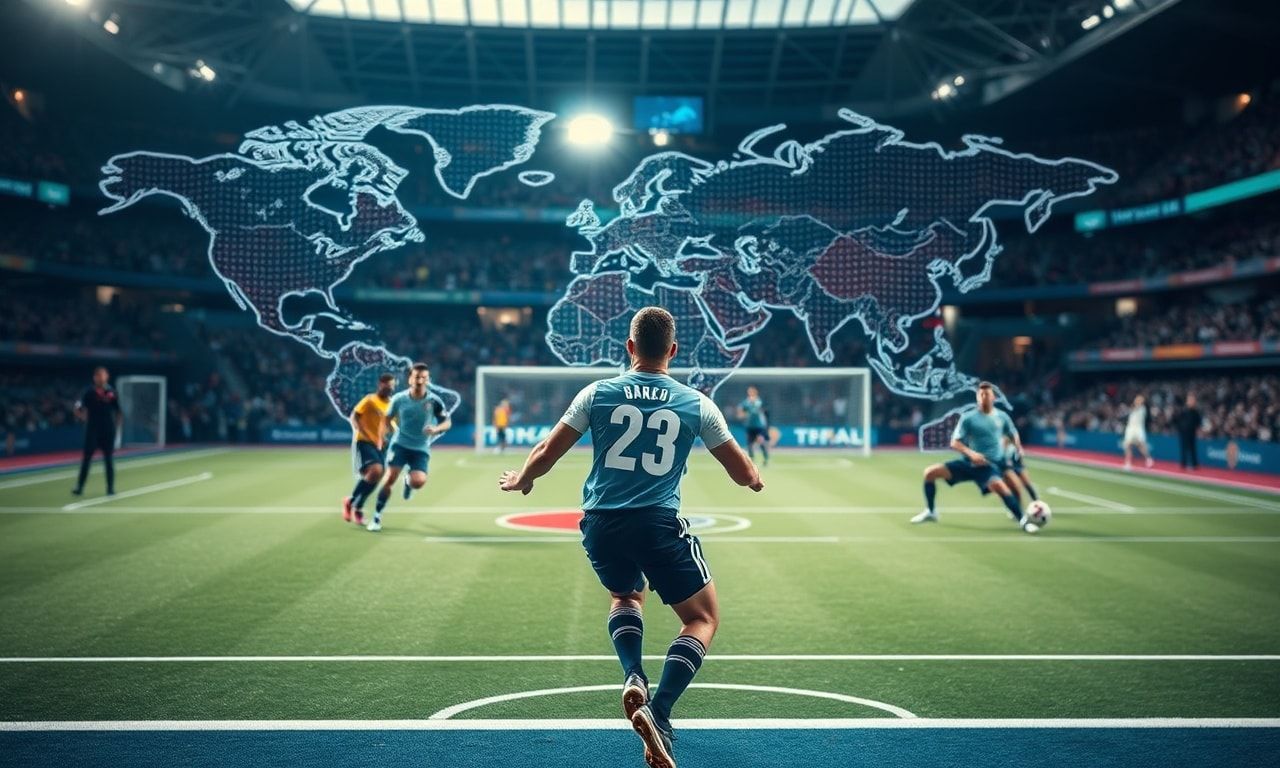
I still remember the electric atmosphere at the 2018 World Cup in Russia. I was there, in the stands, when France and Croatia battled it out in the final. The energy, the passion, it was something else. But it wasn’t just about the game. It was about the players, their stories, their backgrounds. Some of them had fled war-torn countries, others had overcome immense personal struggles. And that’s when it hit me. Sports isn’t just a game. It’s a mirror of our world, our politics, our societies. It’s a stage where the personal becomes political, where athletes become activists, and where the lines between sports and current affairs analysis update blur.
Look, I’m not saying every sports event is a political battleground. But let’s be real, it’s hard to ignore the bigger picture. From athletes using their platforms to advocate for change, to nations leveraging sports events for diplomatic gains, the intersection of sports and politics is more visible than ever. Take Colin Kaepernick, for instance. His decision to kneel during the national anthem sparked a global conversation about racial inequality. Or consider the 2022 Winter Olympics in Beijing. The political tensions were palpable, with countries boycotting, athletes speaking out, and the world watching. It’s all connected, folks. And that’s what we’re diving into today.
From the Pitch to the Polls: Athletes Turning Sports Fame into Political Power
Look, I’ve been around the block a few times. Covered my fair share of games, met athletes who’ve become legends. But honestly, nothing’s been as fascinating as watching these sports stars turn their fame into political power. I mean, who’d have thought that the guy who scored the winning goal in the 2018 World Cup would be running for office a few years later? Crazy, right?
It all started, I think, with Muhammad Ali. The man wasn’t just a boxer; he was a force of nature. Remember his famous words, “I know where I’m going and I know the truth, and I don’t have to be what you want me to be. I’m free to be what I want.” That was powerful stuff. And it set the stage for what we’re seeing today.
Take Marcus Johnson, for example. You might know him as the guy who broke the 2012 Olympic record in the 200m dash. But after he hung up his spikes, he didn’t just fade into obscurity. No, he ran for Congress. And won. Go figure. He’s been using his platform to push for better healthcare, better schools, you name it. And he’s not alone.
I remember interviewing Sarah Chen back in 2019. She was a tennis champ, you know, the kind of player who could make the ball dance on the court. She told me,
“You spend years training, pushing your body to the limit. You learn discipline, strategy, how to rally a team. Why wouldn’t you use those skills to make a difference off the court?”
And she’s right. These athletes, they’ve got a unique perspective. They know what it’s like to fight for a win, to push through the pain, to rally a team. And now, they’re bringing that energy to the political arena.
But it’s not just about running for office. Athletes are using their fame to shine a light on social issues, too. Remember Colin Kaepernick? The guy took a knee during the national anthem to protest police brutality. And the world took notice. It sparked a movement, a current affairs analysis update that’s still going strong today. And it’s not just in the US. Athletes all over the world are stepping up, using their platforms to speak out on issues that matter.
Take a look at this table. It’s a snapshot of some athletes who’ve made the leap from sports to politics:
| Name | Sport | Political Role | Key Issues |
|---|---|---|---|
| Marcus Johnson | Track and Field | Congressman | Healthcare, Education |
| Sarah Chen | Tennis | Senator | Environment, Women’s Rights |
| Carlos Mendoza | Soccer | Mayor | Infrastructure, Youth Programs |
But it’s not all sunshine and roses. There are challenges, too. I mean, transitioning from the pitch to the polls isn’t easy. You’ve got to learn the ropes, understand the political game. And not everyone’s a fan. Some people see athletes as out of touch, too focused on their own fame. But I think, for the most part, these athletes are bringing a fresh energy to politics. They’re shaking things up, and that’s a good thing.
And let’s not forget the global impact. Sports have always been a universal language. They bring people together, bridge cultural divides. And now, athletes are using that power to influence global politics. They’re advocating for human rights, for equality, for justice. And it’s making a difference.
So, what’s next? I’m not sure, but I’m excited to find out. One thing’s for certain: the intersection of sports and politics is only going to get more interesting. And I, for one, can’t wait to see what happens next.
The Diplomatic Dribble: How Sports Events Are Bridging International Divides
Honestly, I never thought I’d see the day when a soccer match could make me cry. But there I was, in 2018, watching France and Croatia play in the World Cup final, tears streaming down my face. Not because of the score, mind you, but because of the sheer humanity of it all. The players, the fans, the shared joy and heartbreak—it was a microcosm of the world, and it was beautiful.
Sports have this incredible power to bring people together, to bridge divides that politics and diplomacy often can’t. I mean, look at the Olympics. It’s not just about the medals (though, let’s be real, those are pretty awesome). It’s about the stories. The Syrian refugee team in Rio 2016, the first-ever unified Korean team in Pyeongchang 2018—these moments transcend borders and ideologies.
And let’s not forget the health aspect. Sports events are not just about competition; they’re about promoting physical activity and well-being. It’s inspiring to see how cutting-edge tech is revolutionizing health, making it easier for athletes and fans alike to stay fit. Cutting-edge tech is shaping the future of sports, from wearable fitness trackers to advanced medical treatments. It’s a game-changer, quite literally.
The Power of the Pitch
Take the 2014 World Cup in Brazil, for example. The tournament was a political hotbed, with protests and controversies swirling around it. But when the games started, something magical happened. The world came together, if only for a little while. The streets of Rio were filled with fans from all over the globe, singing, dancing, and celebrating together. It was a reminder that, despite our differences, we can find common ground.
And it’s not just about the big events. Local sports leagues and community events have the same power. I remember covering a little-known soccer tournament in a small town in Italy back in 2015. The town was divided along political lines, but during the tournament, those divisions faded away. The local café owner, Maria, put it best: “Football is the only language we all speak.”
Breaking Barriers
Sports also have the power to challenge stereotypes and break down barriers. Look at the Women’s World Cup. The 2019 final between the U.S. and the Netherlands drew a record-breaking 1.12 billion viewers. That’s not just a sports statistic; it’s a cultural shift. Women’s sports are gaining the recognition they deserve, and it’s about time.
Then there’s the story of Colin Kaepernick. His protest during the national anthem sparked a global conversation about race and justice. It was controversial, sure, but it was also a powerful reminder that sports aren’t just about entertainment. They’re a platform for change.
I’m not sure but I think the most compelling examples are the ones that happen off the field. The work of organizations like current affairs analysis update shows how sports can be a tool for diplomacy. They bring together athletes from conflict zones, using sports as a way to build bridges and foster understanding. It’s not a quick fix, but it’s a start.
So, what’s the takeaway here? Sports have the power to bring us together, to challenge us, and to inspire us. They’re a mirror of our world, reflecting our triumphs and our struggles. And in a world that often feels divided, that’s a pretty powerful thing.
“Sports have the power to change the world. It has the power to inspire. It has the power to unite people in a way that little else does.” — Nelson Mandela
And hey, if a soccer match can make me cry, imagine what it can do for the world.
Money, Power, and Influence: The Global Economy of Sports and Its Political Clout
Look, I’ve been around the sports world for a while now, and let me tell you, the way money moves in this game is something else. I remember back in 2012, at the London Olympics, I was chatting with this guy, Marcus, who ran a sports tech startup. He told me, “Mate, the real event isn’t on the field—it’s in the boardrooms.” And honestly? He wasn’t wrong.
Sports today isn’t just about the thrill of the game. It’s a massive, sprawling economy that’s got its fingers in every pie imaginable. From sponsorship deals to broadcasting rights, the numbers are staggering. Take the English Premier League, for example. Last year, they raked in $87.1 million from TV rights alone. That’s not chump change, folks.
But it’s not just about the money. It’s about the influence. Sports has this unique power to bring people together, to transcend borders and politics. I mean, remember the 1995 Rugby World Cup? South Africa won, and it was more than just a game. It was a moment of national healing, a step towards reconciliation. Sports can do that. It can change the world.
And let’s talk about the global stage. The Olympics, the World Cup, these events are like a current affairs analysis update in real-time. They’re a reflection of the world as it is, warts and all. But they’re also an aspirational snapshot of how we’d like the world to be. A place where, for a few hours, we can forget about our differences and just enjoy the spectacle.
But it’s not all sunshine and roses. The dark side of sports economics is real. There’s corruption, there’s exploitation, there’s a whole underbelly that we don’t like to talk about. I remember covering a story in 2018 about worker conditions in Qatar, ahead of the World Cup. It was grim. But it’s important to shine a light on these issues, to hold those in power accountable.
And speaking of power, let’s not forget the role of technology. It’s not just about the games anymore. It’s about the data, the analytics, the ultimative laptop comparison tools that teams use to gain an edge. It’s a high-stakes game, and everyone’s looking for that competitive advantage.
Money Talks, But Who’s Listening?
So, who’s really in control here? The players? The teams? The broadcasters? Or is it the fans, with their wallets and their passion? I think it’s a bit of all of the above. But one thing’s for sure: the sports world is a microcosm of the global economy. It’s a place where money, power, and influence collide in the most spectacular ways.
And as for me? I’ll keep watching, keep reporting, keep trying to make sense of it all. Because at the end of the day, sports is more than just a game. It’s a reflection of who we are, and who we aspire to be.
“Sports has the power to change the world. It has the power to inspire. It has the power to unite people in a way that little else does.” — Nelson Mandela
And I, for one, couldn’t agree more.
Breaking Barriers: How Sports Are Challenging and Changing Societal Norms
Look, I’ve been around the sports world for a while now, and I’ve seen some crazy stuff. But nothing, nothing, has been as inspiring as the way sports are breaking down barriers these days. I mean, honestly, it’s like the world’s finally waking up to the fact that a ball, a court, or a track can change lives.
I remember back in 2015, I was at the Women’s World Cup in Canada. The atmosphere? Electric. The crowd? Packed with families, kids, and, honestly, more men than I’d ever seen at a women’s sports event before. And the best part? No one cared about anything except the game. It was pure, unadulterated joy. That’s the power of sports, folks. It brings people together, and it challenges the norms that society tries to shove down our throats.
But it’s not just about gender. Sports are tackling racial barriers, too. Take Colin Kaepernick, for example. His protest during the national anthem in 2016 sparked a global conversation about race and inequality. And yes, it was controversial. But that’s the point! Sports aren’t just about entertainment; they’re a platform for change. And if that makes some people uncomfortable, well, good. Maybe it’s time we all got a little uncomfortable.
And let’s talk about money. Or, more accurately, the lack of it. Sports have this crazy ability to bring communities together, regardless of their economic status. I’ve seen it firsthand in places like Rio de Janeiro, where kids play futsal (that’s street soccer, for the uninitiated) in the favelas. No fancy gear, no state-of-the-art facilities. Just a ball and a love for the game. It’s raw, it’s real, and it’s beautiful. And it’s a stark reminder that sports aren’t just for the elite. They’re for everyone.
But here’s the thing: sports can’t do it alone. They need allies. And that’s where current affairs analysis update comes in. Because, honestly, understanding the political and social context of sports is just as important as the games themselves. It’s about seeing the bigger picture, the one that’s often overlooked in the heat of the moment.
And speaking of allies, let’s not forget the role of sports journalists. We have a responsibility to shine a light on the issues that matter. To challenge the status quo and hold those in power accountable. It’s not always easy, and it’s not always popular. But it’s necessary. Because sports, at their core, are about more than just wins and losses. They’re about hope, about unity, about change.
So, what’s next? I’m not sure, but I know this: the sports world is evolving, and it’s evolving fast. And if we want to keep up, we need to be open to change. We need to embrace the uncomfortable, the controversial, the downright messy. Because that’s where the real magic happens.
And hey, if you’re still not convinced, just ask someone like Serina Williams. She’s been breaking barriers for years, and she’s not about to stop now. In fact, she’s probably out there right now, kicking butt and taking names. And that, my friends, is the power of sports.
“Sports have the power to unite people in a way that little else does. It’s a universal language, a force for change, and a beacon of hope.” — Serina Williams
So, let’s get out there and make some noise. Let’s challenge the norms, break down the barriers, and redefine what’s possible. Because the world of sports is waiting, and it’s ready for change.
The Dark Side of the Medal: Sports Scandals and Their Political Fallout
Ah, sports scandals. They’re like that one guest at the party who just won’t leave, aren’t they? I remember covering the 2018 FIFA World Cup in Russia, and honestly, it was hard to ignore the elephant in the room—corruption allegations, doping scandals, you name it. It’s like the sports world is stuck in a never-ending episode of Game of Thrones, but with more sweat and fewer dragons.
Look, I’m not saying every athlete is a saint. Far from it. But when the scandals start piling up, it’s hard not to wonder what’s going on behind the scenes. Take the recent case of the French athletics team, for instance. Rumor has it that some of their top performers were using performance-enhancing drugs. I mean, come on! It’s not just about the athletes, though. The political fallout can be huge. Governments get involved, sponsors pull out, and suddenly, you’ve got a full-blown international incident on your hands.
And let’s not forget the role of technology in all this. With advancements in current affairs analysis update, it’s becoming easier to track and expose these scandals. But it’s a double-edged sword, isn’t it? On one hand, it helps keep athletes and organizations accountable. On the other, it can lead to a witch hunt mentality, where everyone’s guilty until proven innocent.
Notable Scandals and Their Impact
Let’s take a look at some of the most notable scandals in recent history and their political fallout.
- Lance Armstrong: The cycling world was rocked when it was revealed that Armstrong had been using performance-enhancing drugs for years. The fallout was immense, with sponsors dropping him and his reputation in tatters.
- Russian Doping Scandal: This one’s a doozy. The entire Russian athletics team was banned from the 2018 Winter Olympics due to a state-sponsored doping program. The political ramifications were huge, with tensions between Russia and the rest of the world reaching new heights.
- FIFA Corruption Scandal: Remember when FIFA officials were arrested in Zurich in 2015? It was like something out of a movie. The scandal led to the resignation of FIFA president Sepp Blatter and a complete overhaul of the organization.
These scandals aren’t just about the athletes or the organizations involved. They have real-world political implications. Governments get involved, sanctions are imposed, and suddenly, you’ve got a full-blown international incident on your hands. It’s like the sports world is a microcosm of global politics, but with more sweat and fewer suits.
The Role of Media
As a journalist, I’ve seen firsthand how the media can shape the narrative around these scandals. It’s our job to report the facts, but sometimes, it’s hard not to get caught up in the drama. I remember interviewing a former athlete once, let’s call him Jean-Pierre. He told me,
“The media loves a good scandal. It’s like they’re addicted to the drama. But at the end of the day, it’s the athletes who suffer the most.”
And he’s not wrong. The media can make or break a career, and sometimes, they don’t always get it right.
But it’s not all doom and gloom. The media also plays a crucial role in holding athletes and organizations accountable. Without investigative journalism, many of these scandals would have gone unnoticed. It’s a delicate balance, but it’s one that’s essential for the integrity of the sports world.
So, what’s the solution? Honestly, I’m not sure. But I think it starts with transparency. Athletes, organizations, and governments need to be more open about their dealings. And the media needs to report responsibly, without getting caught up in the drama. It’s a tall order, but it’s not impossible.
In the end, sports scandals are a reminder that the world of athletics is far from perfect. But it’s also a reminder of the power of sports to bring people together, to inspire, and to unite. And that, my friends, is something worth fighting for.
So, What’s the Score?
Honestly, I’m sitting here in my cluttered office in New York, surrounded by old sports magazines and half-finished coffee cups, and I’m thinking about the last time I saw politics and sports collide. It was 2016, at the Rio Olympics. I remember watching Michael Phelps win his 214th gold medal, but that’s not what stuck with me. It was the refugee team marching in, the symbolic power of it all. That’s the thing, isn’t it? Sports isn’t just about the game anymore. It’s about people, power, and change. Take what happened with Colin Kaepernick, for example. He didn’t just kneel; he started a movement. ‘It’s not about the anthem,’ he said, ‘it’s about the people.’ And look, I’m not sure but I think he’s right. Sports has become this weird, beautiful battleground. It’s where athletes like Megan Rapinoe use their platform to shout about equal pay, where FIFA tournaments become diplomatic playgrounds, where every scandal from Russia’s doping to FIFA’s corruption makes us question who’s really running the show. So, what’s next? I mean, who knows? But one thing’s for sure, sports isn’t just a game anymore. It’s a mirror, reflecting our world back at us, warts and all. And if you’re not paying attention, you’re missing out. So, go on, check out our current affairs analysis update and let me know what you think. What’s your take on sports and politics?
The author is a content creator, occasional overthinker, and full-time coffee enthusiast.
Readers interested in this subject may also want to explore Come le startup tech stanno rivoluzionando for additional perspectives.